
Botox Treatment Explained

There is a particular moment that arrives for many people somewhere between their mid twenties and mid forties when the mirror begins to prompt more questions than answers. Not dramatic questions, and not necessarily anxious ones, but simple curiosity about the lines that have appeared across a forehead, or the faint crease that has settled between the eyebrows after a decade of frowning at phones and laptops. It is the same curiosity that has filled dermatology clinics for years and that has now migrated to social platforms. People want to know what Botox actually is, what it can do, and as importantly, what it cannot.
What is Botox?
For something so widely discussed, neurotoxin treatments are still poorly understood. Botox has become the catch-all name for the entire category, much like Kleenex for tissues. It is one brand of botulinum toxin type A, but it is often used as shorthand for any injectable that relaxes targeted facial muscles. Dysport and Xeomin belong to the same family and function in much the same way, but their names have not settled into public vocabulary with the same comfort. The result is a landscape full of assumptions, some accurate, many not.
Botulinum toxin type A is a purified form of a naturally occurring substance. In cosmetic settings it is injected into specific muscles to reduce movement. These movements, repeated over years, are what deepen expression lines. When the muscle relaxes, the skin lying above it receives a period of rest. During that rest the skin may soften, rebound or in some cases return to a smoother state altogether. What the treatment does not do is add volume. That is the role of fillers, which sit in an entirely separate category with a different purpose, different material and different effect.
Understanding that distinction is the starting point for any informed decision. Botox and its counterparts are about movement. Fillers are about contour. Many people arrive at their first appointment believing the two are interchangeable. They are not, and good practitioners spend a considerable amount of time explaining that difference before any discussion of treatment begins.

Botox vs Dysport vs Xeomin
The names that dominate this field have long clinical histories. Botox was approved for medical use in the late 1980s, followed by cosmetic approval in 2002. Dysport received its cosmetic approval in 2009, and Xeomin in 2011. All three work through the same mechanism of action. They interrupt communication between nerves and muscles in the treated area, which temporarily reduces the muscle’s ability to contract. At a molecular level the proteins differ, particularly in the accessory proteins that accompany the core neurotoxin. Xeomin’s distinguishing feature is the absence of these accessory proteins, which has helped position it as a more streamlined product, although its practical effect remains broadly similar to its counterparts once it reaches the tissue.
For patients, the more material differences are not molecular but experiential. Some report that Dysport takes effect faster. While Botox often develops over three to ten days, Dysport may be noticeable one or two days sooner. Others find that Dysport seems to spread more readily in the tissue, though this claim is rooted more in anecdote than in rigorous clinical evidence. Still, even perceived differences matter, and many people develop a preference that is as personal and as subjective as choosing between cola brands. Most would not distinguish them in a blind test, but some feel strongly that one suits them better.
Clinics tend to carry multiple neurotoxins, and pricing can differ. Botox is often slightly more expensive because of the wholesale cost to the clinic. This does not make Dysport inferior or superior. It simply reflects the commercial arrangements behind the products. For a patient who notices no difference in effect, price may shape their preference. Others base their decision on familiarity, choosing Botox because it is the most recognisable name.
Most Popular Botox Requests
Regardless of brand, the request that clinicians hear most often is for the vertical lines between the eyebrows, sometimes called 11 lines. These are created by repeated frowning and often become noticeable earlier than other lines. Horizontal forehead lines are a close second. These develop when the brows lift in expression, and because that expression is part of daily communication, many people become aware of the lines long before they feel the need for any other cosmetic intervention. Crow’s feet round out the top three. These lines appear with smiling and squinting and can be softened with careful treatment that maintains expression.
Jaw Botox
The rise of lower face treatments has been notable in recent years. Requests to address the masseter muscles, which sit at the back of the jaw and control chewing, have increased significantly. Many people clench or grind their teeth during the day or while asleep, and over time the muscle can become enlarged. Treating this area with Botox or Dysport reduces tension and can slim the lower face. Some pursue this for functional reasons, seeking relief from discomfort. Others appreciate the aesthetic effect that occurs as a natural consequence of reducing the muscle’s workload. Treatment of the jawline and platysmal bands in the neck is also becoming more common as people look for more balanced facial rejuvenation rather than focusing solely on the upper third of the face.
Standard Cosmetic Benefits
One of the most frequent questions concerns the ability of Botox to treat deep wrinkles, particularly those that remain visible at rest. Fine lines tend to respond more quickly. Deeper lines take longer and may require consistent treatment over months or years to show significant improvement. For some, the muscle relaxation alone will allow the skin to repair enough that the line becomes faint or disappears entirely. For others, especially when the underlying skin quality is compromised by factors such as sun exposure, the improvement may be partial. In these cases Botox is one part of a broader strategy that can include fractional laser resurfacing, chemical peels or filler placed strategically to support the tissue. The key is to understand that neurotoxin is a tool, not a universal solution.
There are also clear boundaries. Nasolabial folds, the creases that run from the outer tip of the nose toward the corners of the mouth, are not treated with Botox. These folds form because of the structure and movement of deeper facial tissues. Reducing movement in the mid face to a degree that would erase these folds would impair the ability to smile and speak normally. These areas are better approached with filler, skin tightening, or sometimes surgical intervention, depending on the individual’s anatomy and goals.
Another common concern is hooded or tired looking eyes. In the right candidate, neurotoxin placed carefully can create a mild lift of the brow and reduce lines around the eyes, which can open the upper eyelid area. If the hooding is caused by significant excess skin, Botox will not resolve it. In that situation, surgical removal of redundant tissue may be the more effective solution. A good practitioner guides the patient toward the option that will genuinely address the concern rather than promising results that the tool cannot deliver.
The challenge for people seeking treatment is not only in learning what Botox can do but in choosing who should administer it. In many countries a wide range of medical professionals are legally permitted to inject neurotoxin. Their backgrounds, training and experience vary significantly. Some are board certified physicians in dermatology or plastic surgery who have completed formal training in aesthetic and reconstructive procedures. Others come from allied health professions and have acquired injectable skills through shorter courses. Although this diversity allows for accessibility, it also places the burden on the patient to identify competence.
A well trained injector does not simply place product into predictable locations. They evaluate facial structure, muscle strength, skin quality, asymmetry and expression. They consider lifestyle factors that may influence results. They document doses carefully and adjust them in future treatments. They have a clear understanding of complications and know how to respond if something does not proceed as expected. These are not tasks that rely solely on manual skill. They rely on an understanding of anatomy, physiology and the behaviour of neurotoxins within tissue.
Good clinics are transparent about training and qualifications. They provide before and after photographs that reflect real patients rather than stock images. They do not encourage unnecessary treatments. They set realistic expectations. And they accept that sometimes the best course is to advise against treatment entirely if the desired outcome cannot be achieved safely or naturally.
The cultural conversation surrounding injectables has shifted in recent years. What was once discreet is now openly discussed among friends and online. Yet openness has come with its own misconceptions. Some expect dramatic erasure of lines that will leave not a trace of movement. Others fear a frozen look and avoid treatment altogether. The reality lies between these extremes. Well executed Botox preserves expression. The aim is not to strip away character but to reduce the harshness that can appear when certain muscles overpower the face.
When to Start Botox?
There is also the mistaken belief that starting early will prevent aging entirely. Neurotoxin does not hold back time. It reduces dynamic wrinkles, but it does not stop changes in skin thickness, elasticity or volume. Starting in one’s twenties may reduce early signs of movement lines, but the long term result depends more on genetics, sun protection and general skin care than on any single injection. Equally, starting later is not an obstacle. Many people begin in their forties or fifties and find that targeted treatment provides a more rested appearance without altering their identity.
The best experiences tend to happen when expectations are aligned and the approach is conservative. Most people, particularly those new to injectables, prefer to begin with modest doses and adjust gradually. This allows both the patient and practitioner to see how the muscles respond and to refine the plan over time. It also helps maintain a sense of authenticity, which is increasingly valued as the aesthetic space becomes more saturated and more public.
Behind the technical detail and the cultural noise is a simple reality. Botox, Dysport and Xeomin are tools. They are effective when used appropriately and limited when used in the wrong context. They form part of the evolving toolkit of modern dermatology, which is increasingly focused on subtle, personalised approaches rather than dramatic alterations.
For anyone considering these treatments, the most useful step is not to study molecular diagrams or memorise brand differences. It is to find a practitioner who listens carefully, explains clearly and respects the boundary between enhancement and excess. Neurotoxin can soften, refine and refresh, but its best work is done when the goal is not perfection but balance.
In a world where personal presentation plays a growing role in professional and social life, these treatments have become part of the mainstream. Yet their value lies not in trend or visibility. It lies in giving people choices. Whether someone uses that choice or not, having access to reliable information removes much of the uncertainty. And a bit of clarity, much like a softened line across the brow, can make all the difference.

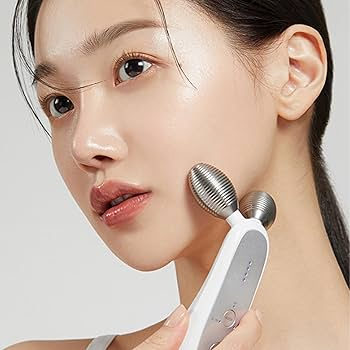









A facelift is not a declaration of war on ageing. It is a decision to reset certain aspects of facial structure at a moment when the balance between skin quality, volume and bone support has shifted enough that topical care alone is no longer sufficient. It is not about freezing time. It is about choosing where to pause.