
Exfoliation Science Explained
Over the past decade, exfoliation has moved from niche dermatological advice to cultural orthodoxy and then, just as swiftly, to something approaching heresy. Around 2020, acids were embraced with evangelical zeal. Glycolic toners, peeling masks and overnight treatments became fixtures on bathroom shelves across the world. Predictably, many people overdid it. Skin barriers were compromised, irritation followed and the backlash arrived. Exfoliation, once the hero, became the villain.
The truth, as is often the case in skincare, sits comfortably in the middle. Exfoliation is neither a miracle nor a menace. It is a tool, useful when applied with intent and restraint, damaging when misunderstood or overused. To understand where it fits, it helps to step away from trends and return to fundamentals: what exfoliation actually does, why skin needs it and how different acids behave once they touch the face.
At its most basic level, exfoliation addresses a simple biological fact. Human skin sheds continuously. Every day, the body produces between 20,000 and 40,000 dead skin cells. Over time, these accumulate on the surface. Even for someone who wears no makeup at all, that build-up can amount to more than a gram per day. Add moisturiser, sunscreen, foundation and powder, and the surface of the skin quickly becomes congested.

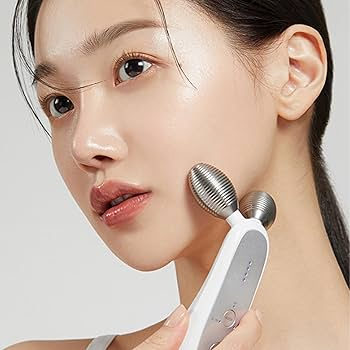
Cleansing alone does not solve this. A face wash removes surface debris, oil and pollutants, but it does little to break the bonds that hold dead skin cells together. Those bonds need to be loosened if the cells are to shed effectively. That is where exfoliation comes in.
Skin operates on a renewal cycle. New cells are formed in the deeper layers and gradually migrate upwards, eventually becoming the outermost layer before shedding. In youth, this cycle can take as little as 10 to 14 days. With age, it slows. By the thirties, it is closer to 30 days. By the forties and fifties, it stretches further still. As turnover slows, dead cells linger. Skin can appear dull, uneven and rough. Pores can become clogged more easily. Makeup sits poorly. Exfoliation helps to compensate for this slowdown, encouraging a more orderly shedding process.
There are three broad categories of exfoliation. Each works differently and suits different needs.
The most familiar is physical exfoliation. This includes scrubs, loofahs, brushes and tools such as pumice stones. In products like traditional face scrubs, abrasive particles manually dislodge dead skin cells. Used aggressively or too often on the face, these can cause irritation and micro-tears, particularly when the particles are irregular in shape. For facial skin, this approach is rarely ideal.
That said, physical exfoliation has its place. The skin on the body is thicker and more resilient. Using a loofah on the legs or arms, or a pumice stone on the soles of the feet, is generally well tolerated. Professional treatments such as microdermabrasion also fall into this category and can be effective when performed correctly.
The second category is enzymatic exfoliation. These products typically use fruit-derived enzymes from papaya, pineapple or pumpkin. Enzymes work by dissolving the proteins that bind dead skin cells together at the surface. Their action is superficial and relatively gentle. For beginners, or for those with sensitive skin, enzymatic exfoliants can be a useful entry point. They offer modest brightening and smoothing without the intensity of acids.
The third category is chemical exfoliation. Despite the name, these products are no more synthetic than the others. They simply rely on specific acids to loosen the bonds between dead skin cells. Chemical exfoliants offer the greatest precision, which is why they are often preferred.
Chemical exfoliants fall into three main groups: alpha hydroxy acids, beta hydroxy acids and polyhydroxy acids.
Alpha hydroxy acids, or AHAs, are water-loving acids that work primarily on the skin’s surface. The most commonly used are mandelic acid, lactic acid and glycolic acid. Their behaviour varies according to molecular size. Mandelic acid has the largest molecule and penetrates slowly. It is generally the gentlest option and suits sensitive skin. Lactic acid offers exfoliation with a focus on brightening and hydration. Glycolic acid has the smallest molecule. It penetrates more deeply, making it the most potent of the group. It is effective at smoothing texture, improving radiance and, according to research, can also support collagen production and water retention in the skin.
Beta hydroxy acids, or BHAs, are oil-loving. The most common is salicylic acid. Because it dissolves in oil, salicylic acid can penetrate into pores, making it particularly useful for oily and acne-prone skin. It helps to clear congestion and reduce breakouts, which in turn can minimise the dark marks that acne leaves behind.
Polyhydroxy acids, or PHAs, are newer additions. They are closely related to AHAs but have larger molecules. This makes them gentler and more surface-focused. PHAs also offer antioxidant benefits. They are well suited to very sensitive skin and to delicate areas such as the under-eyes and lips.
Choosing an exfoliant depends less on skin type labels and more on what you are trying to address.
For oily or acne-prone skin, salicylic acid is the most logical starting point. It can be delivered in several formats. Leave-on toners, such as Paula’s Choice 2% BHA Liquid Exfoliant, allow for prolonged contact and deeper action. Cleansers containing 2% salicylic acid, like the Neutrogena option long familiar to dermatology clinics, offer a gentler approach with shorter contact time. Pads, such as First Aid Beauty’s 2% acne clearing pads, allow for targeted application and control, particularly around sensitive areas like the nose.


For dry skin, glycolic acid often performs well. It may seem counterintuitive to exfoliate dryness, but glycolic acid’s ability to attract and hold water can improve hydration over time. Makeup tends to apply more evenly on exfoliated skin, reducing the patchiness that dryness can cause.
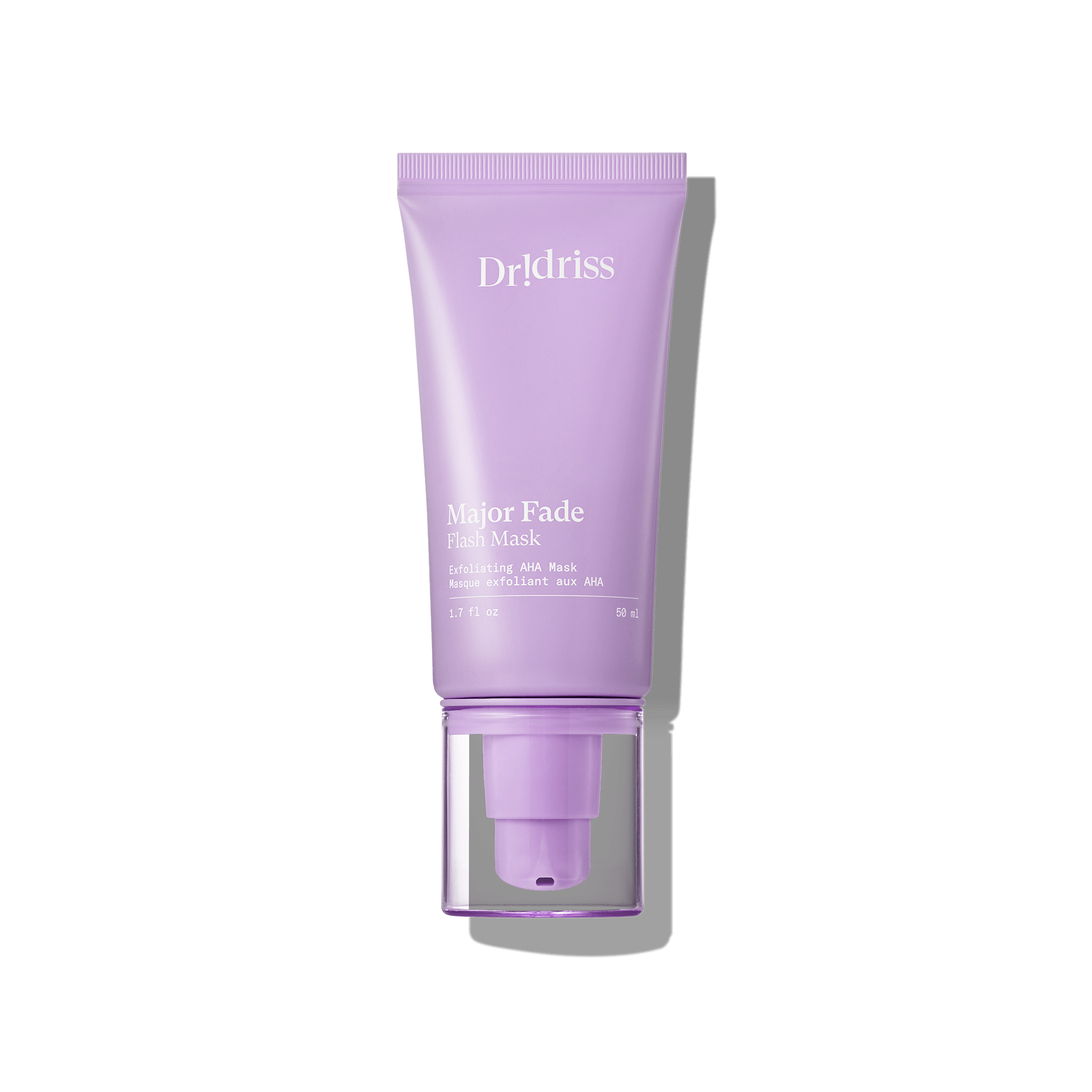
Masks are a particularly controlled way to use stronger acids. A product such as the Major Fade Flash Mask, which combines 15% glycolic acid with 3% lactic acid and tranexamic acid, offers exfoliation alongside brightening benefits. Used a few times a week, masks impose a natural limit on frequency. They are applied, timed and removed, rather than layered mindlessly night after night. This particular mask may produce a brief tingling sensation as the skin adjusts to its pH, which typically subsides within a couple of minutes.
Masks also allow for precision. They can be applied only where needed, making them useful for treating areas of pigmentation without exposing the entire face to exfoliation. This approach can be helpful for post-inflammatory hyperpigmentation following acne.
For very sensitive or dry skin, PHAs such as gluconolactone are often better tolerated. Gluconolactone features in products like the Dr. Idriss Barrier Baste Lip Peel, where it gently exfoliates the lips without provoking irritation. Used in colder months, followed by the corresponding Lip Base, it helps to manage flaking without compromising the barrier. PHAs can also be used cautiously under the eyes to soften fine lines, provided there is no history of irritation.
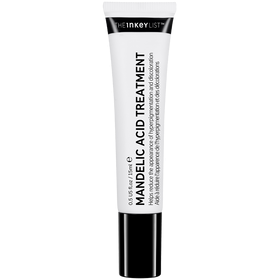
Mandelic acid is another option for sensitive skin. Its slower penetration reduces the risk of inflammation. Serums such as The Inkey List mandelic acid formula are designed to address uneven tone while remaining relatively mild.
Combination skin complicates matters only slightly. The key is to prioritise the dominant concern. If uneven tone and pigmentation are the main issues, AHAs like glycolic and lactic acid make sense. If congestion and breakouts are more prominent, salicylic acid should take precedence. It is entirely reasonable to alternate products across the week, using salicylic acid on some nights and AHAs on others. What matters is avoiding daily use of multiple exfoliants.
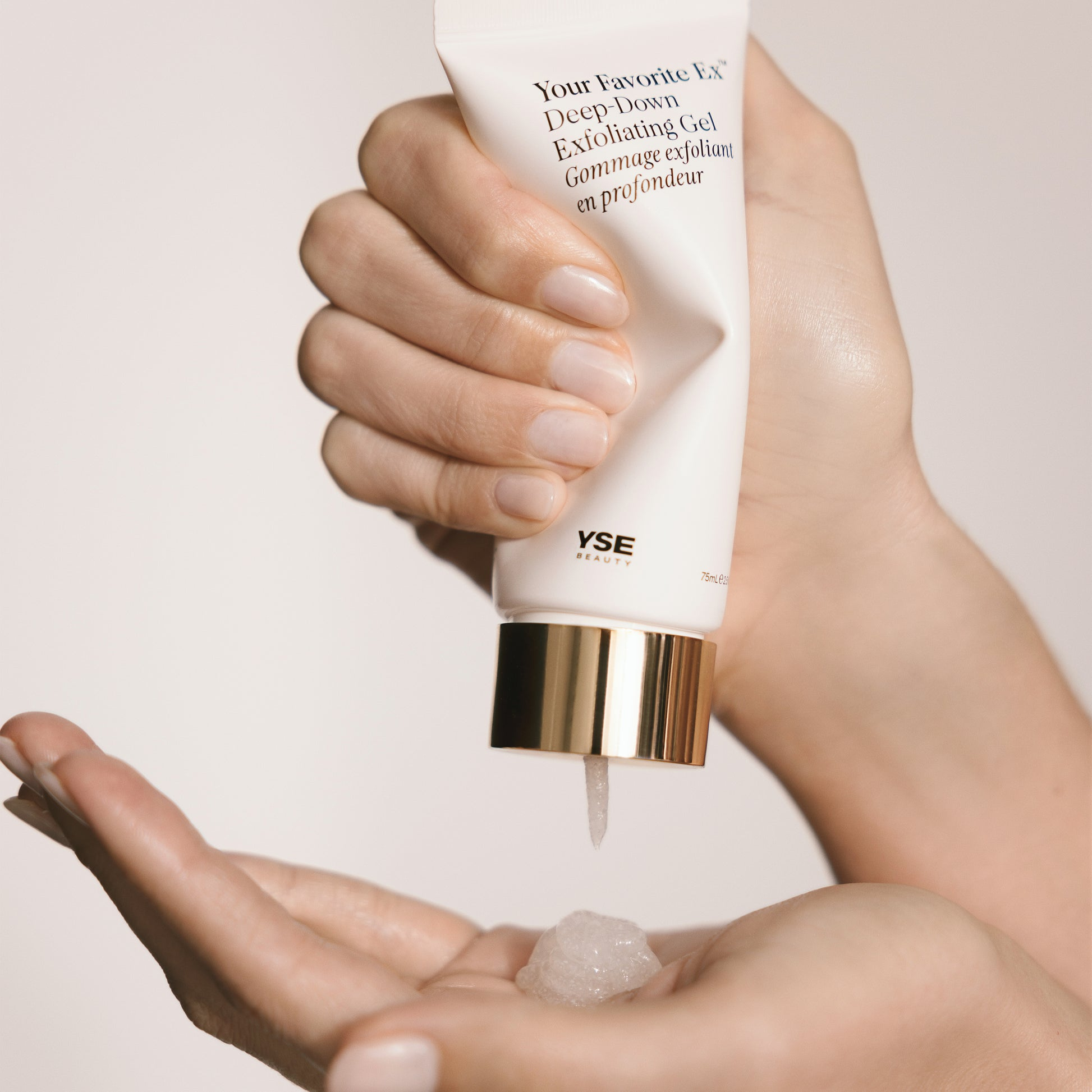
Enzymatic exfoliants remain a sensible choice for those who are hesitant or reactive. Products such as YSE Beauty’s gentle enzymatic and physical exfoliating gel offer light surface smoothing without significant penetration. They can restore some brightness without challenging the skin barrier.
There are circumstances in which exfoliation should be avoided altogether. Inflamed, irritated or compromised skin does not benefit from further disruption. Conditions such as rosacea flare when the barrier is stressed. In these cases, it is better to pause exfoliation entirely for several weeks and focus on calming and repairing the skin. Exfoliation can be reintroduced gradually once stability returns.
When and how exfoliation is incorporated matters as much as the product itself. Starting slowly is essential. Once or twice a week is sufficient for most people. At most, exfoliation should occur four times a week, depending on tolerance, climate and season. Many people find they exfoliate more comfortably in winter, when sun exposure is lower and skin renewal feels slower. In summer, frequency often needs to be reduced.
Evening is the preferred time for exfoliation. Exfoliating at night removes the day’s build-up and allows the skin to recover while you sleep. Acids should be applied to clean, dry skin. Sensitive areas deserve caution. The under-eye area, the corners of the nose and the folds around the mouth are more prone to irritation, particularly when liquids pool in these creases.
Sun protection is non-negotiable. Exfoliation increases photosensitivity. A broad-spectrum sunscreen the following day is essential to protect newly revealed skin.
Perhaps the most overlooked aspect of exfoliation is restraint. The goal is not perpetual peeling or constant tingling. Healthy exfoliation supports the skin’s natural rhythm rather than attempting to override it. When used thoughtfully, acids can restore clarity, improve texture and enhance the performance of the rest of a skincare routine. When abused, they simply create new problems to solve.
In a landscape prone to extremes, exfoliation benefits from moderation. It is neither obsolete nor indispensable. It is simply useful, when understood and applied with care.










A facelift is not a declaration of war on ageing. It is a decision to reset certain aspects of facial structure at a moment when the balance between skin quality, volume and bone support has shifted enough that topical care alone is no longer sufficient. It is not about freezing time. It is about choosing where to pause.